Blog | Real Estate News & Market Trends

You’ll find our blog to be a wealth of information, covering everything from local market statistics and home values to community happenings. That’s because we care about the community and want to help you find your place in it. Please reach out if you have any questions at all. We’d love to talk with you!

Nov. 10, 2025

The VA Home Loan Advantage: What Every Veteran Should Know Right Now

The VA Home Loan Advantage: What Every Veteran Should Know Right Now


If you’ve served in the military (or if your spouse has), you have access to one of the most powerful homebuying tools out there. The chance to buy a home without having a down payment.

Unfortunately, 70% of Veterans (that's 7 out of every 10) don’t know about this benefit, according to Veterans United.

a group of people in circlesAnd that’s a big missed opportunity for those who’ve earned this benefit through service. So, let’s break down what you really need to know about Veterans Affairs (VA) home loans right now.

Why VA Home Loans Can Be a Great Option

For nearly 80 years, VA loans have made homeownership possible for millions of Veterans and active-duty service members. Here are just a few of the top perks according to the Department of Veteran Affairs:

  • Options for $0 Down Payment: Many Veterans can buy a home without spending years saving up.
  • Fewer Upfront Costs: The VA limits which types of closing costs Veterans have to pay, helping you keep more cash on hand when you’re finalizing your purchase.
  • No Private Mortgage Insurance (PMI): Unlike many other loan types, VA loans don’t require PMI, lowering your monthly costs.

These features make VA loans a great way for service members (or their family) to build stability, save money, and start creating long-term wealth through homeownership.

Can You Still Get a VA Loan with the Government Shutdown?

But lately, there’s been some confusion about whether VA loans are still available due to the government shutdown. And that uncertainty has kept some Veterans from taking the next step.

While there may be processing delays, Veterans United explains you can still get a loan:

“There’s been a lot of confusion and uncertainty about how a government shutdown will affect VA home loans . . . The good news is that the shutdown has minimal impacts on VA lending. Lenders are still able to order appraisals, obtain a borrower’s Certificate of Eligibility, submit the VA Funding Fee and more. In short, Veterans are still able to use their home loan benefit to buy a home or refinance an existing mortgage.”

So, despite the headlines, you can still use your VA home loan benefits today. The process is ready when you are. It just may take more time to go through.

Why the Right Agent and Lender Matter

Just remember, using your VA home loan is easier (and smoother) when you have the right team behind you. As VA News puts it:

“Choosing a military-friendly broker or agent who understands the VA home loan application process can make all the difference in the homebuying experience. Finding the right agency or brokerage is just as important as locking in a good VA mortgage lender. Communication is key to getting to the loan closing table.”

A knowledgeable agent and an experienced lender can help you navigate every step, all the way from qualifying to closing. With their help, you can make sure you’re getting the most out of your benefits.

Bottom Line

If you’re a Veteran, a VA home loan is one of the most valuable benefits you’ve earned through your service. It offers options for no down payment, limited closing costs, and more.

Want to learn more? Talk to a lender so you can take full advantage of the benefits you’ve earned.

Posted in Helpful Tips
Nov. 3, 2025

How To Make Sure Your Sale Crosses the Finish Line

How To Make Sure Your Sale Crosses the Finish Line


If there was one simple step that could help make your home sale a seamless process, wouldn't you want to know about it?

There’s a lot that happens from the time your house goes under contract to closing day. And a few things still have to go right for the deal to go through. But here’s what a lot of sellers may not know.

There's one part of the process where some homeowners are hitting a road bump that’s causing buyers to back out these days. But don’t worry. The majority of these snags are completely avoidable, especially when you understand what’s causing them and how to be proactive.

That’s where a great agent (and a little prep) can make all the difference.

What’s Causing Some Buyers To Back Out

The latest data from Redfin says 15% of pending home sales are falling through. And that’s not wildly higher than the 12% norm from 2017-2019. But it is an increase.

That means roughly 1 in 7 deals today don’t make it to the closing table. But, at the same time, 6 out of 7 do. So, the majority of sellers never face this problem – and odds are, you won’t either. But you can help make it even less likely if you know how to get ahead.

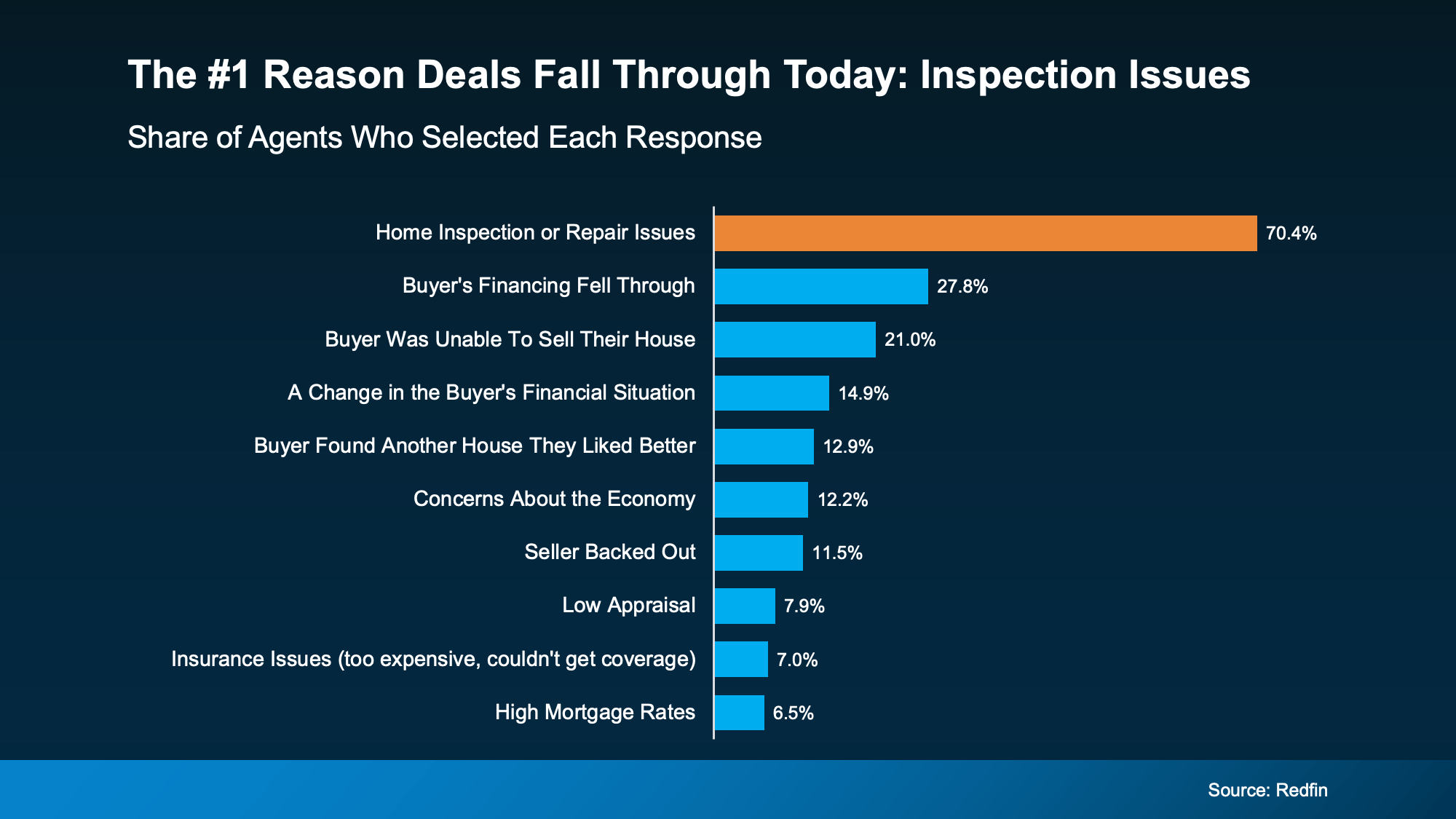
You might assume the main reason buyers are backing out today is financing. But that’s actually not the case. The most common deal breaker today, by far, is inspection and repair issues (see graph below):

a graph with text on itHere’s why that’s a sticking point for buyers right now:

  • Buyers are already stretched thin from high prices and challenging mortgage rates, so they don’t have the appetite (or budget) for unexpected repairs.
  • If they’re going to spend all that money, they want to get something that’s move-in ready. They don’t want to take on another high-cost project themselves.
  • They have more homes to choose from, so if yours seems like a hassle or if you’re not willing to fix something, they can just move on.

The sellers with the best agents have heard about this shift and they’re doing what they can to go in prepared. Enter the pre-listing inspection.

What’s a Pre-Listing Inspection?

It’s exactly what it sounds like. It’s a professional home inspection you schedule before your home hits the market. And while it’s not required, the National Association of Realtors (NAR) explains why it could be a valuable step for some sellers right now:

“To keep deals from unraveling . . . it allows a seller the opportunity to address any repairs before the For Sale sign even goes up. It also can help avoid surprises like a costly plumbing problem, a failing roof or an outdated electrical panel that could cause financially stretched buyers to bolt before closing.”

Think of it as a way to avoid future headaches. You’ll know what issues could pop up during the buyer’s inspection – and you’ll have time to fix them or decide what to disclose before you put your house on the market.

This way, when the buyer’s inspector walks in, you’re ready. No surprises. No last-minute panic. No deal on the line.

Is It Worth It?

Generally speaking, a pre-listing inspection costs just a few hundred dollars. So, it’s not a big expense. And the information it gives you is invaluable. But before you make that investment, talk to your local agent.

In some markets, it may not be worth it. And in others, it may be the best move you can make. It all depends on what’s happening where you are and what’s working for other local sellers. If your agent recommends getting one, they’ll also:

  • Help you decide which issues to fix
  • Prioritize repairs based on what buyers in your area are focusing on
  • Connect you with trusted professionals to get the work done
  • Ensure you understand local disclosure laws

That small step could save your deal (and your timeline).

Bottom Line

So, if there was one simple step that could help make your home sale go according to plan, would you do it?

If you’d rather deal with surprises on your terms (not with the clock ticking under contract), let’s talk about whether a pre-listing inspection makes sense for your house.

It may be worth it so you can hit the market confident, prepared, and in control.

Posted in Helpful Tips
Oct. 28, 2025

Why Some Homes Sell Quickly – and Others Don’t Sell at All

Why Some Homes Sell Quickly – and Others Don’t Sell at All


A few years ago, inventory hit a record low. Just about anything sold – and fast. But now, there are far more homes on the market. Listings are up almost 20% from this time last year. And in some areas, supply is even back to levels we last saw in 2017–2019. For sellers, that means one thing:

Your house needs to stand out and grab attention from day one.

That’s especially true when you consider why the number of homes for sale is up. Here’s how it works. Available inventory is a mix of: 

  • Active Listings: homes that have been sitting on the market, but haven’t sold yet
  • New Listings: homes that were just put on the market

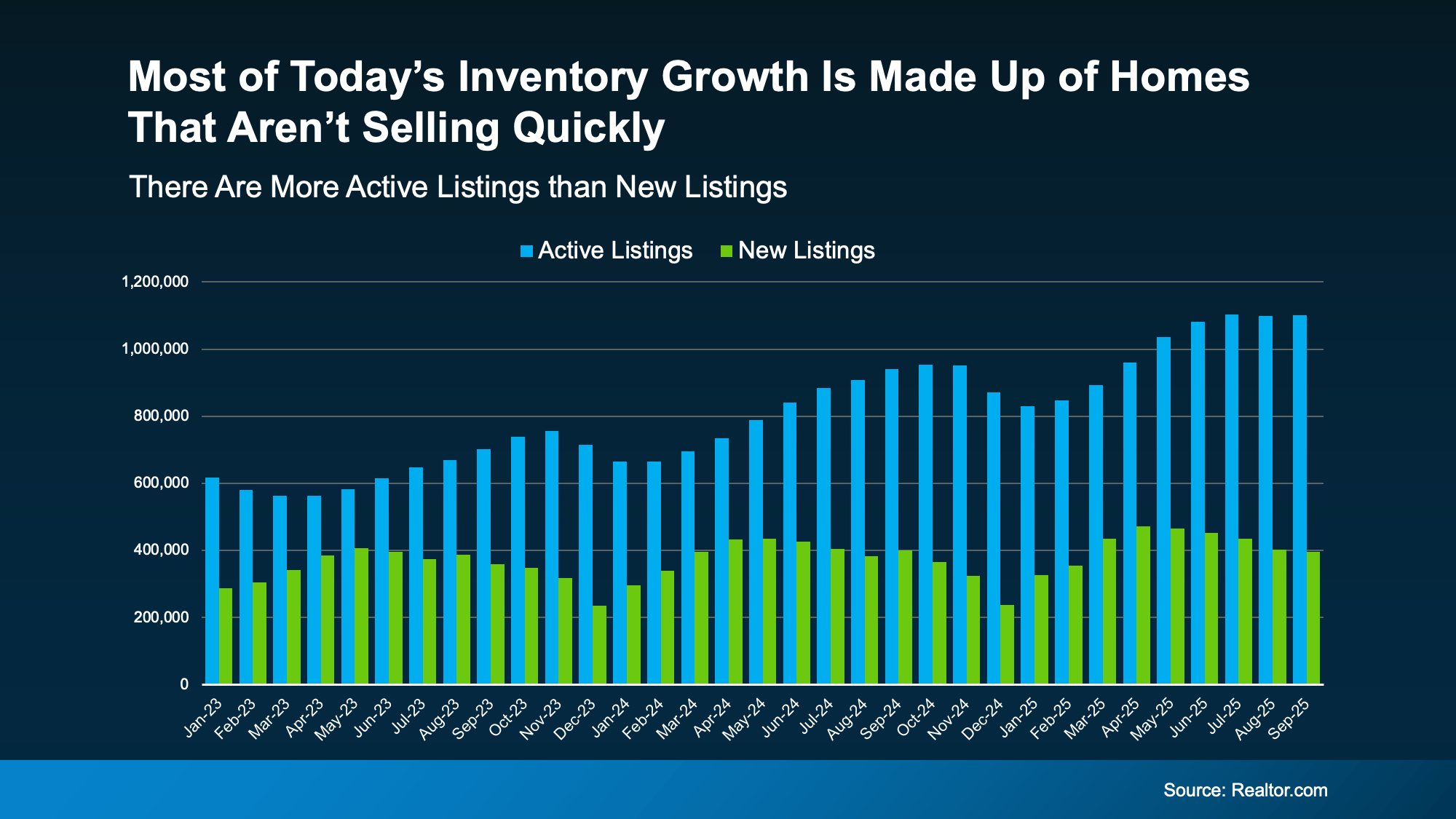
Data from Realtor.com shows most of the inventory growth lately is actually from active listings that are staying on the market and taking longer to sell (see the graph below).

The blue bars show active listings. These are the homes that are sitting month to month and not selling. The green bars are new listings, the homes that were just put on the market. And it’s clear there are fewer new listings compared to how many are staying on the market unsold.

a graph of sales growthSince you don’t want your house to be one of the ones that take a long time to sell, let’s break down where things can go sideways and how to set yourself up to sell quickly.

Why Some Homes Sell and Others Sit

The secret to selling in today’s market is simple. Make sure your house is easy for buyers to say yes to as soon as it is listed. 

Price it based on current conditions (not what your neighbor sold for 3 years ago). Make important repairs. And highlight the best things about your house. If you do that, it will sell in any market – sometimes even faster than you’d think. Because the truth is, homes that are priced right today are still selling. 

It’s the homeowners who are clinging to outdated expectations that are seeing their house sit and their listing go stale. According to Redfin and HousingWire, here are some of the most common reasons sales stall out:

  • Priced it too high from the start
  • Skipped necessary repairs before listing
  • Didn’t stage the house well
  • Sellers won't negotiate with buyers
  • Limited availability for showings
  • Ineffective marketing or listing pictures

Most of those things didn’t matter as much just a few years ago. When inventory was at a record low, sellers could skip the prep, name their price, and still walk away with multiple offers over their asking price.

But today’s market is different now that inventory has grown. And that means your approach needs to be different too.

You don’t want to try out old strategies and aim too high just to see what sticks. Your first few weeks on the market are everything. That’s when your listing gets the most attention – and when pricing or presentation mistakes hurt the most. Get it wrong up front and your house will sit...and sit. Get it right, and it’ll be snatched up before you know it.

The Right Agent Helps Your House Stand Out

Selling quickly isn’t about luck. It’s about knowing how to play to the market you’re in. And that’s where your agent comes in.

A great agent will analyze your local market, suggest a price based on the latest comparables sold in your neighborhood, and create a marketing plan that makes buyers pay attention from day one. They’ll also walk you through any repairs you need to make or whether you need to bring in a staging company. As the National Association of Realtors (NAR) explains:

“Home sellers without an agent are nearly twice as likely to say they didn’t accept an offer for at least three months; 53% of sellers who used an agent say they accepted an offer within a month of listing their home.”

That’s the power of getting it right (and getting expert help) from the start.

Bottom Line

There are more homes for sale today than there were even just a year ago, but that doesn’t have to work against you.

When your house is priced right, shows well, and is marketed effectively, it will sell. Let’s connect if you want to know how to make that happen in our market this fall.

Posted in Selling
Oct. 17, 2025

The $280 Shift in Affordability Every Homebuyer Should Know

The $280 Shift in Affordability Every Homebuyer Should Know


If you paused your plans to move because of high rates or prices, it may finally be time to take a second look at your numbers. Affordability is improving in 39 of the top 50 markets, according to First American. And that’s the 5th straight month where buying a home has started to get a little bit easier.

Let’s break this down into real dollars, so you can see the difference this could make for you (and your move).

Monthly Payments Are Coming Down

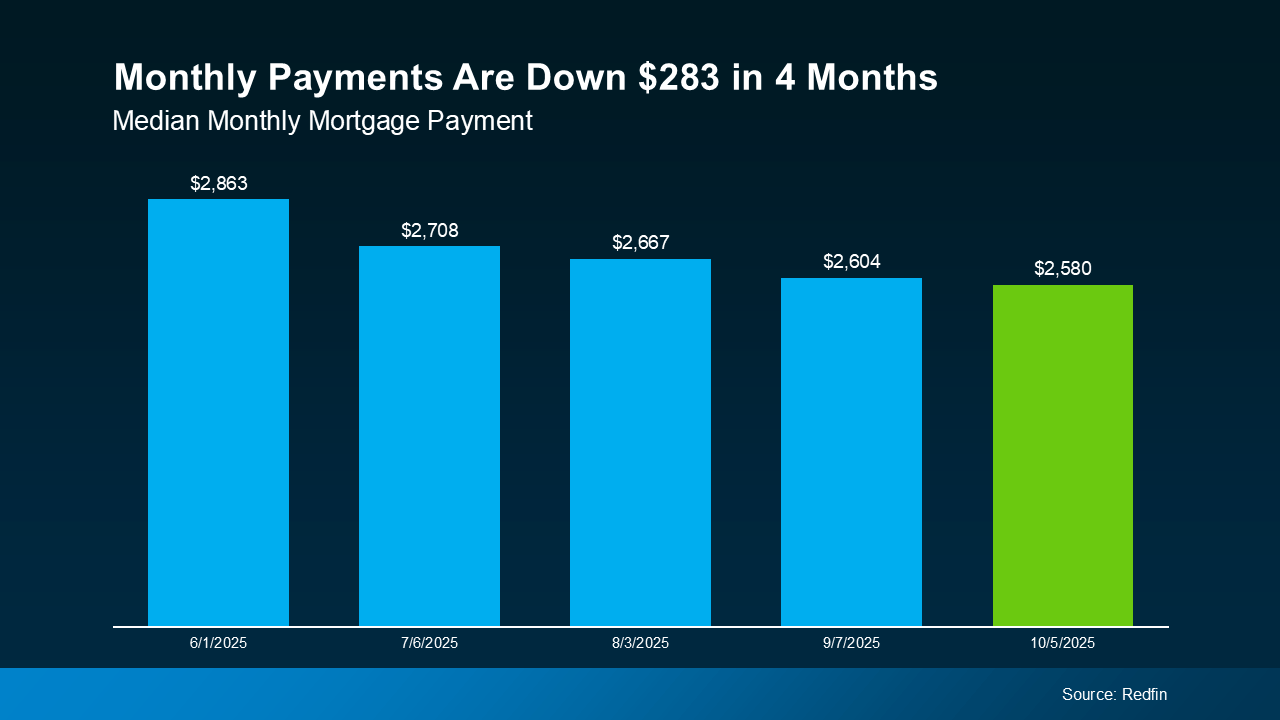
One of the clearest signs of this shift is in monthly payments. The latest data from Redfin shows mortgage payments on a median-priced home are now $283 lower than they were just a few months ago (see graph below):

a graph of a graph of moneyThis kind of monthly savings adds up fast, and totals nearly $3,400 over the course of a year.

While this isn’t enough to completely change the affordability game overnight, think about it this way. When you’re putting together a homebuying budget, a few hundred dollars could be the difference between being comfortable buying and feeling like money’s a bit tight.

And from a home-search perspective, it could even be enough to change the price point you can look at. According to Redfin:

“A borrower with a $3,000 monthly budget can now afford a $468,000 home, about $22,000 more than in June."

And that’s a big deal if you haven’t found a home you love in your price range yet. It gives you a little more flexibility to find the one that’s right for you.

Either way, that’s a big win.

What’s Behind the Shift?

Two key factors are working in your favor right now:

  • Mortgage rates have eased from their high earlier this year
  • Home price growth is slowing in many markets

Both of those things help your bottom line and give you a bit of breathing room if you’re buying a home. As Andy Walden, Head of Mortgage and Housing Market Research at ICE Mortgage Technology, says:

“The recent pullback in rates has created a tailwind for both homebuyers and existing borrowers. We’re seeing affordability at a 2.5-year high . . .”

Whether you’re a first-time homebuyer or someone looking to move-up into a bigger house, the shifts happening this year could make your move possible. Connect with a trusted agent or lender to see what your monthly payment would look like at today’s rates.

For you, the savings could be the difference between “not yet” and “let’s go.”

Bottom Line

Affordability is improving in many markets. And that resets the math on your move.

If you’ve been sitting on the sidelines, this is your cue to start looking again. Let’s run the local numbers together so you can get a rough estimate of how much more buying power you may have than you did just a few months ago.

Posted in Helpful Tips
Oct. 13, 2025

Don’t Let Unrealistic Pricing Cost You Your Move

Don’t Let Unrealistic Pricing Cost You Your Move


These days, you’re going to want to get your price right when you get ready to sell your house. Honestly, it’s more important than ever. Why? While you may want to list high just to see what happens, that’s a plan that can easily backfire, and it’s going to cost you in today’s market.

And the risk isn’t just missing out on offers, it’s missing out on the move you needed to make in the first place.

The Real Pitfall of Overpricing

Many homeowners remember what their neighbor’s house sold for a few years ago, and they want to chase that same sky-high number. The problem is, that was a different market.

Today, there are more homes for sale. Buyers have more options to choose from. They don’t have to get into bidding wars where they offer way over asking just to compete. Now they can come in at, or even below, list price. And if you’re not open to that, they’ll move on. Lisa Sturtevant, Chief Economist at Bright MLS, explains:

“Buyers will have more leverage in many, but not all, markets. Sellers will need to adjust price expectations to reflect the transitioning market.”

But here’s the good news. You still have one big advantage as a seller. According to the Federal Housing Finance Agency (FHFA), home values went up by a staggering 54% over the last 5 years. So, even if you compromise just a little bit on your sale price today, odds are you’ll still come out way ahead.

The challenge? Most sellers aren’t thinking about it that way. They’re stuck on what a neighbor got months or years ago – and that’s a costly mistake.

Overpricing Can Stall Your Whole Move

Here’s what happens. A seller lists too high. Buyers stay away. No offers come in. The house sits. And suddenly, that seller is facing a tough decision. Do they cut the price? Stick it out? Or give up altogether?

Unfortunately, a late price cut may not be enough. Buyers often see that as a red flag that something’s wrong with the house. That’s why some sellers are opting to just pull their listing off the market entirely.

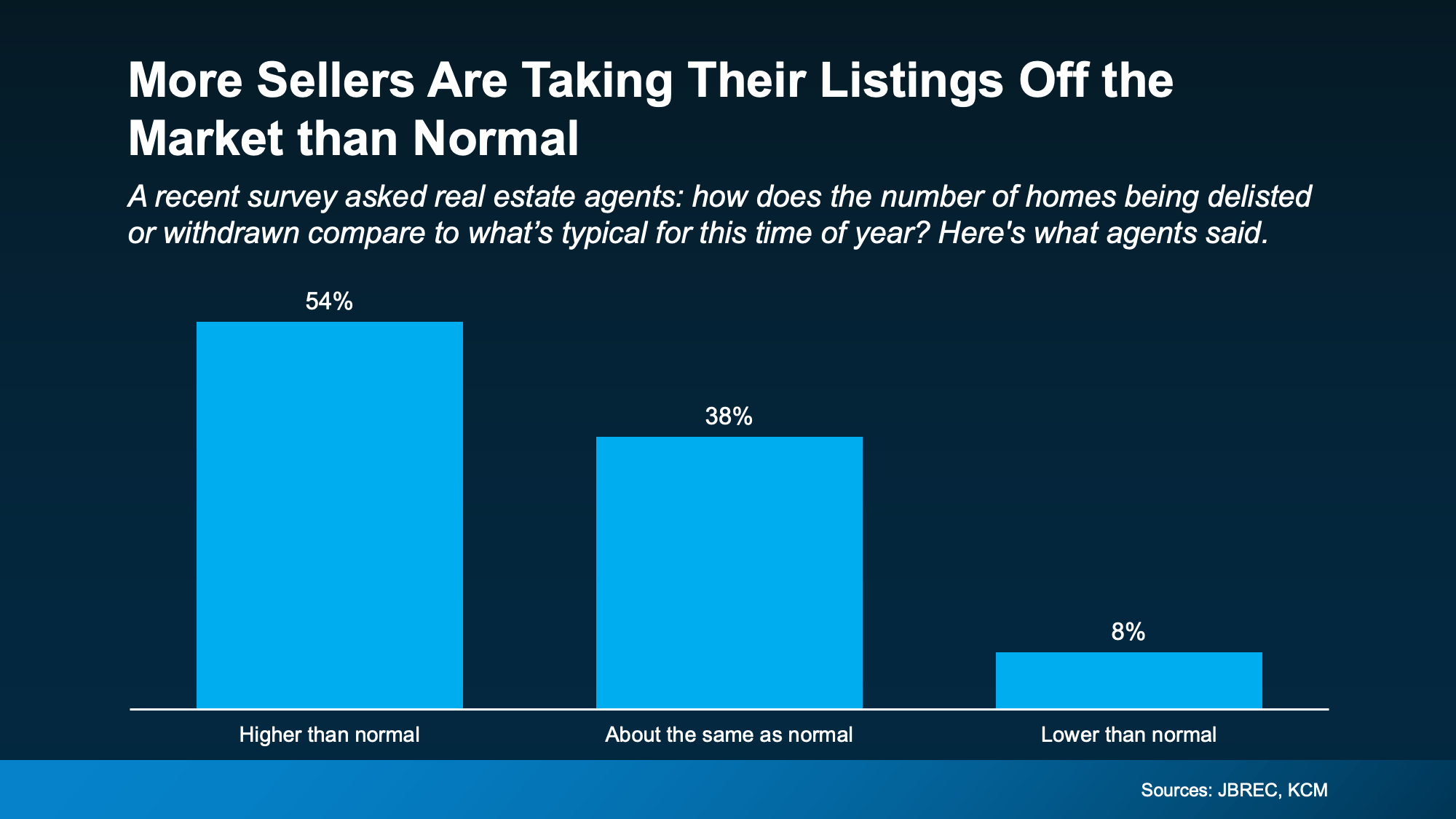
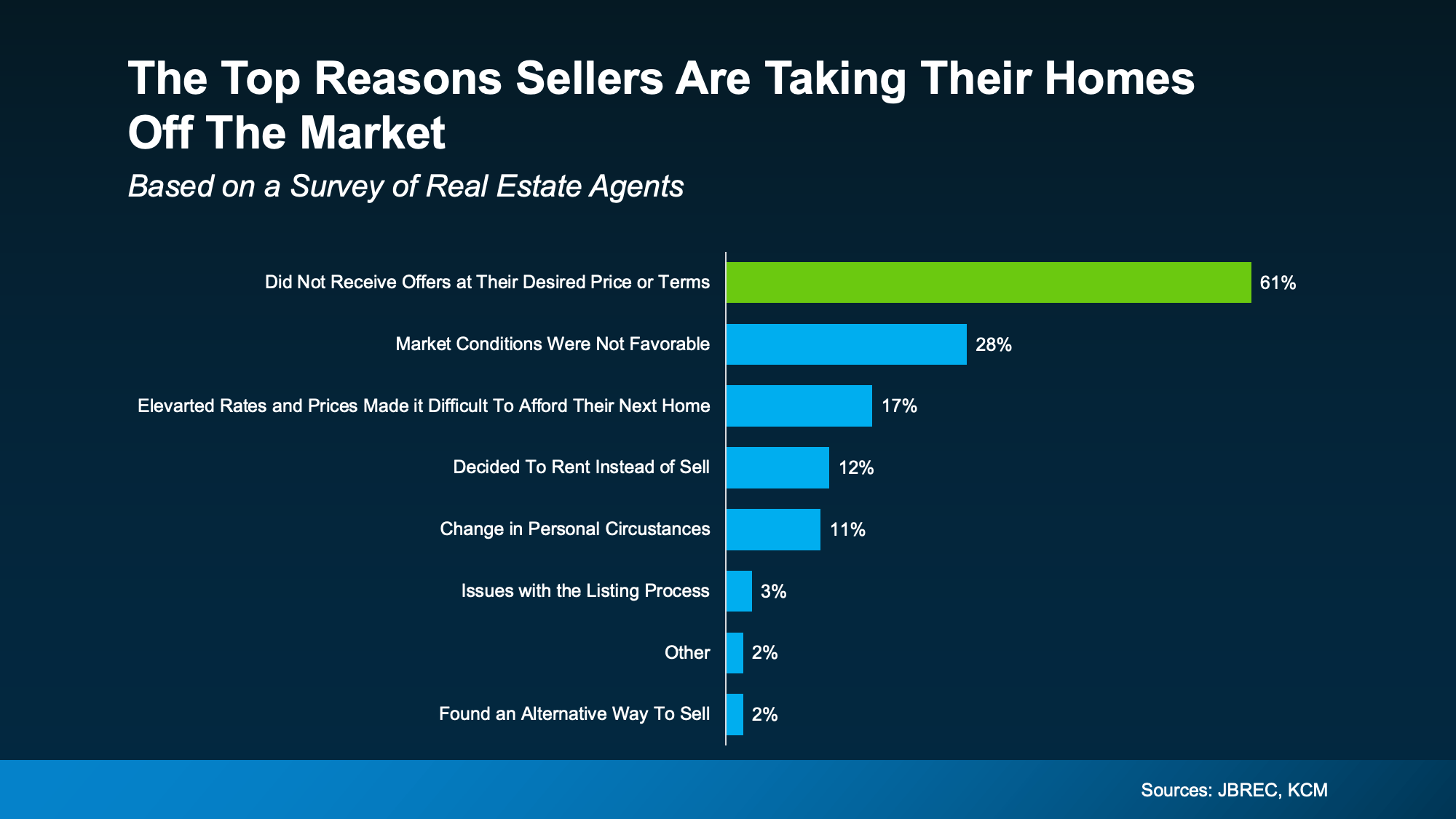
In a recent survey from John Burns Research and Consulting (JBREC) and Keeping Current Matters (KCM) over half of agents (54%) say there are more homes being taken off the market than usual.

a graph of a number of blue squaresAnd the top reasons for that? According to the agents, homeowners didn’t get any offers they felt were fair. The survey from JBREC and KCM explains it like this:

“Sellers holding onto high price expectations is the leading reason they are delisting their homes.”

BrightMLS data backs this up:

“. . . sellers are delisting after having their home on the market and finding they are not getting the price they hoped for.”

It’s more proof pricing too high does more than turn buyers away, it puts your whole move at risk. Because if no one looks at your home or makes an offer, how are you going to sell it?

The Secret To Making Your Move Happen

If you’re selling to relocate for a job, need more space for your growing family, or have to be closer to your relatives as they age, you can’t afford to get stuck. You need a pricing strategy that helps you move forward – and that starts with the right agent.

The sellers who are winning right now are the ones working with experienced local agents who know the current market and aren’t afraid to have honest conversations about price.

And it’s paying off. In the right price range and condition, homes are still selling fast, sometimes even with multiple offers.

Bottom Line

Pricing your house for today’s market isn’t just about getting it sold. It’s about making sure your move doesn’t stall before it starts.

Let’s talk through what buyers are really paying right now in our local area, and how to price your home to match.

Posted in Helpful Tips
Oct. 6, 2025

Why October Is the Best Time To Buy a Home in 2025

Why October Is the Best Time To Buy a Home in 2025


If you’ve been watching from the sidelines, now’s the time to lean in. It’s officially the best time to buy this year. According to Realtor.com, this October will have the most buyer-friendly conditions of any month in 2025:

“By mid-October, buyers across much of the country may finally find the combination of inventory, pricing, and negotiating power they’ve been waiting for—a rare opportunity in a market that has been tight for most of the past decade.”

So, if you’re ready and able to buy right now, shooting for this month means you should see:

  • More homes to choose from
  • Less competition from other buyers
  • More time to browse
  • Better home prices
  • Sellers who are more willing to negotiate

Just remember, every market is different. For most of the top 50 largest metros, that sweet spot falls in October. But the peak time to buy may be slightly earlier or later, depending on where you live. As Realtor.com explains:

“While Oct. 12–18 is the national “Best Week,” timing can shift depending on the local markets. . .”

Best Week To Buy for the Top 50 Largest Metro Areas

  • Atlanta-Sandy Springs-Roswell, GA: September 28 – October 4
  • Austin-Round Rock-San Marcos, TX: September 28 – October 4
  • Baltimore-Columbia-Towson, MD: October 12 – 18
  • Birmingham, AL: October 19 – 25
  • Boston-Cambridge-Newton, MA-NH: October 26 – November 1
  • Buffalo-Cheektowaga, NY: October 12 – 18
  • Charlotte-Concord-Gastonia, NC-SC: November 2 – 8
  • Chicago-Naperville-Elgin, IL-IN: September 28 – October 4
  • Cincinnati, OH-KY-IN: October 12 – 18
  • Cleveland, OH: October 12 – 18
  • Columbus, OH: October 12 – 18
  • Dallas-Fort Worth-Arlington, TX: September 28 – October 4
  • Denver-Aurora-Centennial, CO: October 12 – 18
  • Detroit-Warren-Dearborn, MI: October 12 – 18
  • Grand Rapids-Wyoming-Kentwood, MI: September 28 – October 4
  • Hartford-West Hartford-East Hartford, CT: September 21 – 27
  • Houston-Pasadena-The Woodlands, TX: October 12 – 18
  • Indianapolis-Carmel-Greenwood, IN: October 26 – November 1
  • Jacksonville, FL: October 26 – November 1
  • Kansas City, MO-KS: October 12 – 18
  • Las Vegas-Henderson-North Las Vegas, NV: October 5 – 11
  • Los Angeles-Long Beach-Anaheim, CA: October 12 – 18
  • Louisville/Jefferson County, KY-IN: November 2 – 8
  • Memphis, TN-MS-AR: September 21 – 27
  • Miami-Fort Lauderdale-West Palm Beach, FL: November 30 – December 6
  • Milwaukee-Waukesha, WI: September 7 – 13
  • Minneapolis-St. Paul-Bloomington, MN-WI: October 26 – November 1
  • Nashville-Davidson--Murfreesboro--Franklin, TN: October 12 – 18
  • New York-Newark-Jersey City, NY-NJ: September 14 – 20
  • Oklahoma City, OK: October 12 – 18
  • Orlando-Kissimmee-Sanford, FL: October 26 – November 1
  • Philadelphia-Camden-Wilmington, PA-NJ-DE-MD: September 7 – 13
  • Phoenix-Mesa-Chandler, AZ: November 2 – 8
  • Pittsburgh, PA: October 12 – 18
  • Portland-Vancouver-Hillsboro, OR-WA: October 26 – November 1
  • Providence-Warwick, RI-MA: October 19 – 25
  • Raleigh-Cary, NC: October 12 – 18
  • Richmond, VA: October 26 – November 1
  • Riverside-San Bernardino-Ontario, CA: September 28 – October 4
  • Sacramento-Roseville-Folsom, CA: October 12 – 18
  • San Antonio-New Braunfels, TX: October 12 – 18
  • San Diego-Chula Vista-Carlsbad, CA: October 12 – 18
  • San Francisco-Oakland-Fremont, CA: October 12 – 18
  • San Jose-Sunnyvale-Santa Clara, CA: October 19 – 25
  • Seattle-Tacoma-Bellevue, WA: October 19 – 25
  • St. Louis, MO-IL: October 12 – 18
  • Tampa-St. Petersburg-Clearwater, FL: November 30 – December 6
  • Tucson, AZ: October 12 – 18
  • Virginia Beach-Chesapeake-Norfolk, VA-NC: September 21 – 27
  • Washington-Arlington-Alexandria, DC-VA-MD-WV: October 12 – 18

What the Experts Are Saying

And Realtor.com isn’t the only one saying you’ve got an opportunity if you move now. Lawrence Yun, Chief Economist at the National Association of Realtors (NAR), explains:

Homebuyers are in the best position in more than five years to find the right home and negotiate for a better price. Current inventory is at its highest since May 2020, during the COVID lockdown.”

Daryl Fairweather, Chief Economist at Redfin, puts it like this:

Nationally, now is a good time to buy, if you can afford it . . . with falling mortgage rates and significantly more inventory, buyers have an upper hand in negotiations.”

And NerdWallet says:

“This fall just might be the best window for home buyers in the past five years.”

How To Get Ready for this Golden Window

To make sure you’re ready to jump in whenever your market’s best time to buy arrives, talk to a local agent now. They’ll be able to give you more information on your market's peak time, why it’s good for you, and the steps you’ll need to take to get ready.

Bottom Line

If you're serious about buying, getting prepped for this October window is a smart play.

Want help lining up your strategy? Let's have a quick conversation so you've got the information you need to be ready for this prime buying time.

Posted in Market Updates
Sept. 29, 2025

Closing Costs Unpacked: State-by-State Breakdowns for Today’s Buyers

Closing Costs Unpacked: State-by-State Breakdowns for Today’s Buyers


If you’re planning to buy a home this year, there’s one expense you can’t afford to overlook: closing costs.

Almost every buyer knows they exist, but not that many know exactly what they cover, or how different they can be based on where you're buying. So, let’s break them down.

What Are Closing Costs?

Your closing costs are the additional fees and payments you make when finalizing your home purchase. Every buyer has them. According to Freddie Mac, they typically include things like homeowner insurance and title insurance, as well as various fees for your:

  • Loan application
  • Credit report
  • Loan origination
  • Home appraisal
  • Home inspection
  • Property survey
  • Attorney

National vs. Local: Why the Numbers Look So Different

When you search for information about closing costs online, you’ll often see a national range, usually 2% to 5% of the home’s purchase price. While that’s a useful starting point if you’re working on your homebuying budget, it doesn’t tell the whole story. In reality, your closing costs will also vary based on:

  • Taxes and fees where you live (like transfer taxes and recording fees)
  • Service costs for things like title and attorney work in your local area

While the home price is obviously going to matter, state laws, tax rates, and even the going costs for title and attorney services can change what you expect to pay. That’s why it's important to talk to the pros ahead of time so you know what to budget for. It can put you in control before you even start shopping.

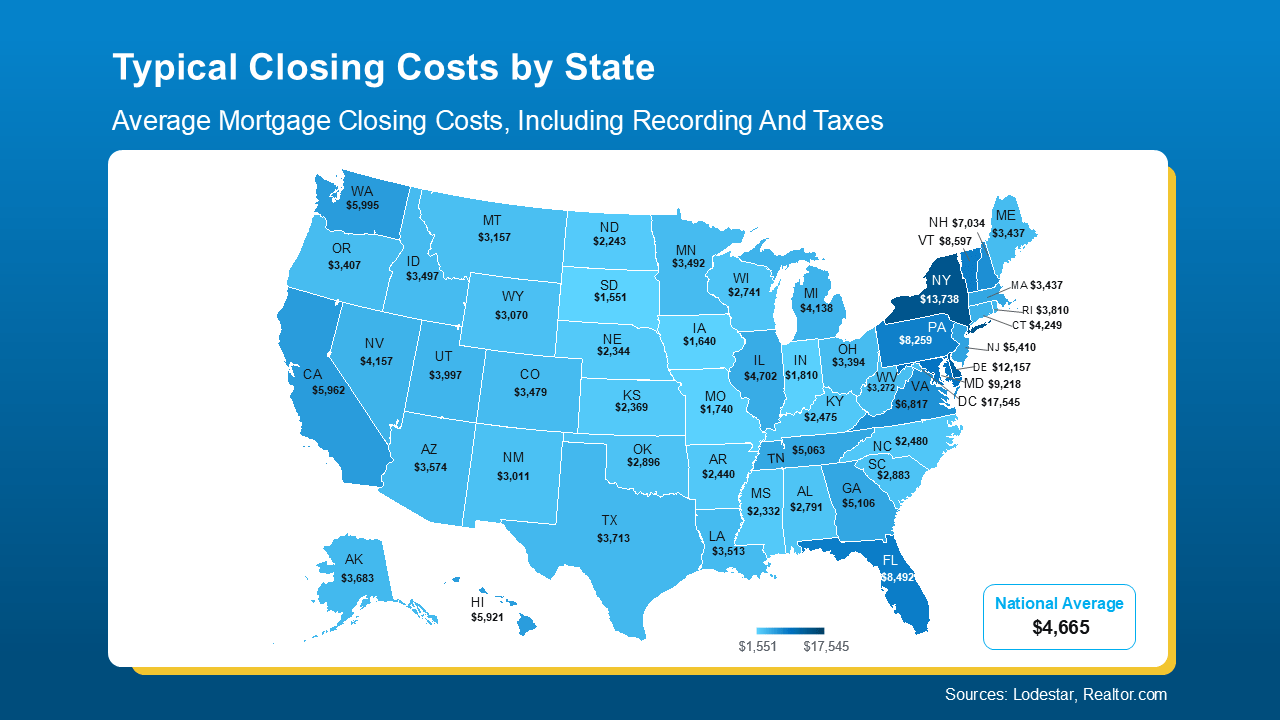
To give you a rough ballpark, here’s a state-by-state look at typical closing costs right now based on those factors for the median-priced home in each state (see map below):

As the map shows, in some states, typical closing costs are just roughly $1-3K. In a few places, they can be closer to $10-15K. That’s a big swing, especially if you’re buying your first home. And that’s why knowing what to expect matters.

If you want a real number to help with your budget, your best bet is to talk to a local agent and a lender. They can run the math for your price range, loan type, and exact location.

And just in case you’re looking at your state’s number and wondering if there’s any way to trim that bill, NerdWallet shares a few strategies that can help:

  • Negotiate with the seller. Ask for concessions like a credit toward your closing costs.
  • Shop around for homeowner’s insurance. Compare coverage and rates before you commit.
  • Check for assistance programs. Some states, professions, and neighborhoods offer help. Your agent and lender can point you to what’s available locally.

Bottom Line

Closing costs are a key part of buying a home, but they can vary more than most people realize. Knowing your numbers (and how to potentially bring them down) can go a long way and help you feel confident about your purchase. 

Let’s look at typical closing costs in our area and get you a personalized estimate, so you can craft your ideal budget.

Posted in Market Updates
Sept. 24, 2025

Why Buyers and Sellers Face Very Different Conditions Today

Why Buyers and Sellers Face Very Different Conditions Today


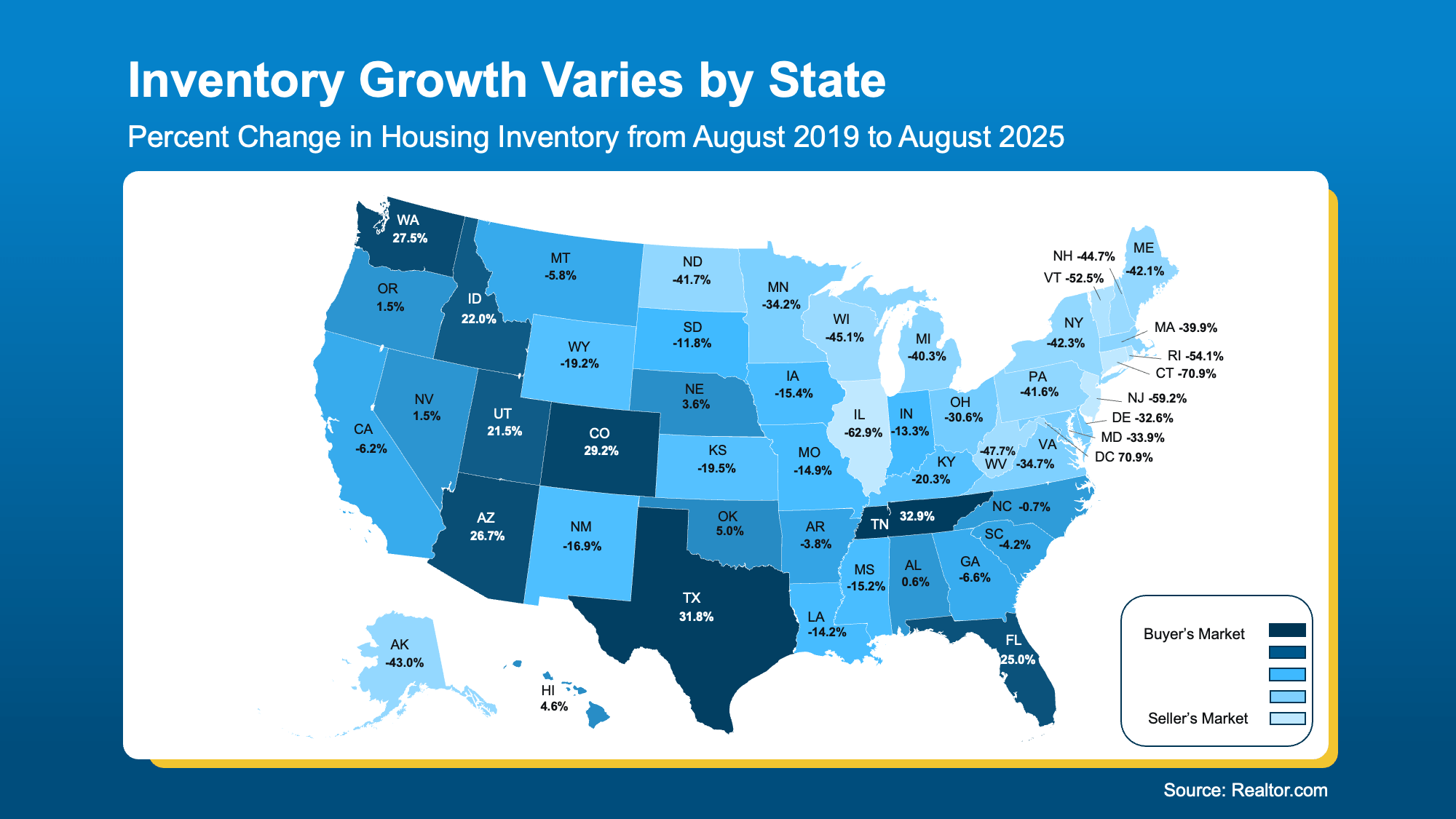
There’s a new divide in housing right now. In some states, buyers are gaining ground. In others, sellers still have the upper hand. It all depends on where you live. Curious what's happening in your state?

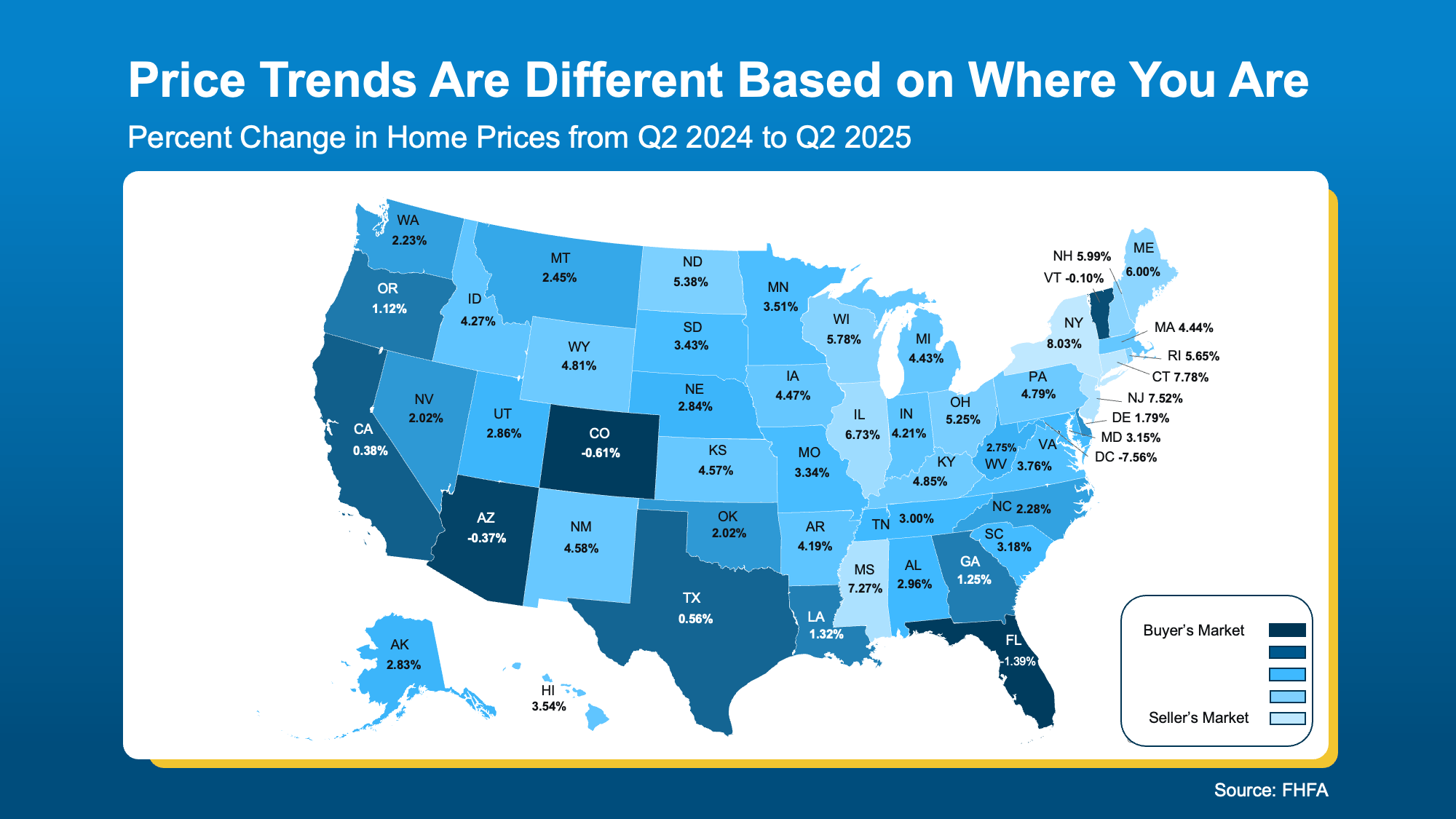
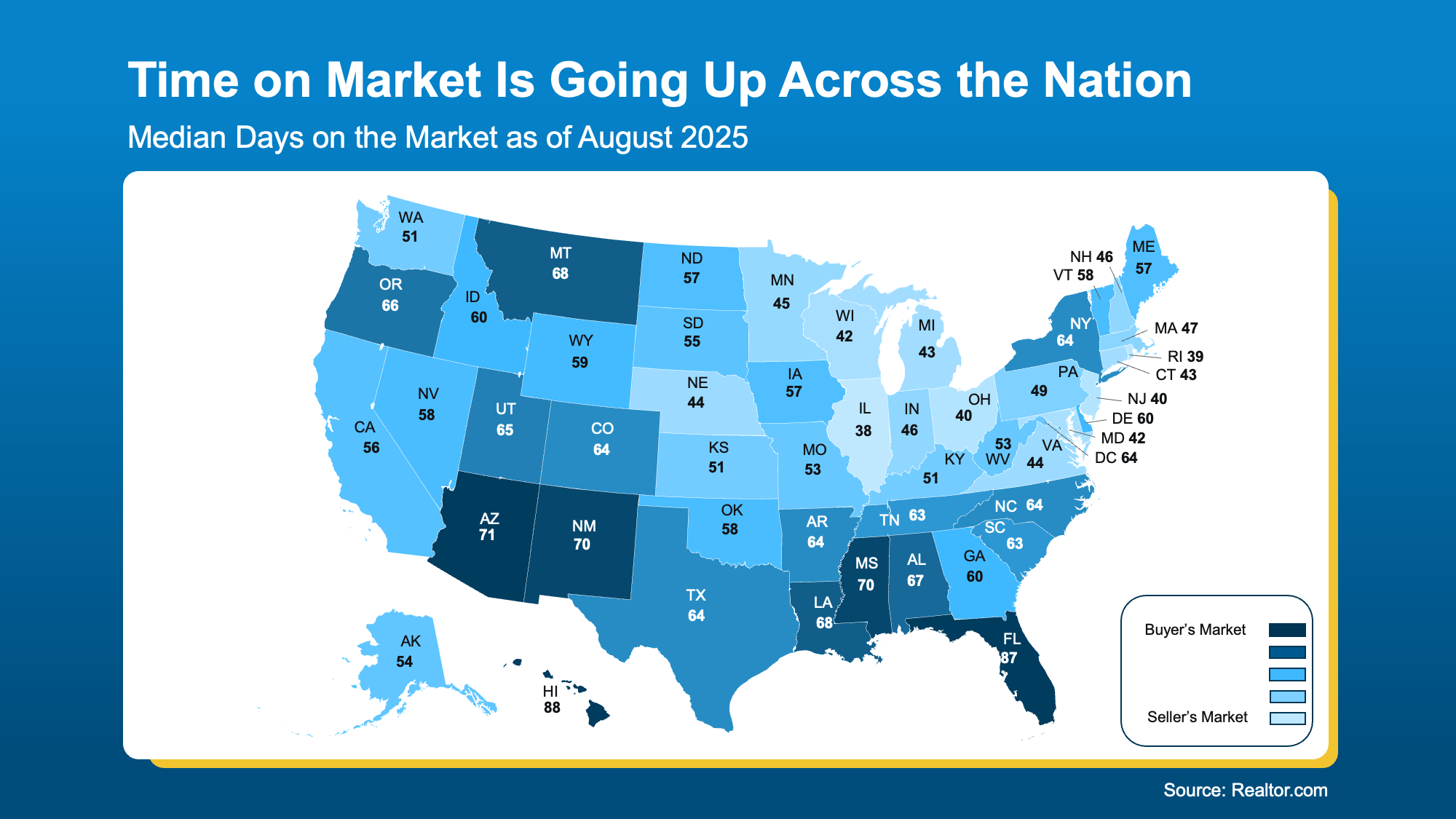
These 3 maps show how the split is playing out across the country. In each one:

  • Darker Shades of Blue = Buyer friendly
  • Lighter Shades of Blue = Seller strong

Inventory Sets the Stage

While the number of homes for sale has improved pretty much across the board, how much growth we’ve seen can look dramatically different based on where you live. And that impacts who has the leverage today.

This map uses data from Realtor.com to break it down:

  • The darker shades of blue show where inventory has risen more than in other areas of the country. Buyers here have more to choose from and should have an easier time finding a home and leveraging their negotiating power.
  • The lighter shades of blue are where inventory is still low. Sellers are more likely to sell quickly and make fewer concessions.

Prices Follow Inventory

The second map tracks how home prices are shifting by state. Just like above, you can see the divide taking shape. Many of the same areas are darker blue. That’s because there’s such a close tie between inventory and prices. When inventory rises, prices moderate.

  • The darker shades of blue are where prices are actually coming down slightly or flattening. Because, with more homes for sale, sellers may have to cut their price or throw in concessions to get a deal done. And that benefits budget-conscious buyers.
  • The lighter shades of blue show areas where prices are still climbing because inventory is low. Sellers may still see buyers competing for homes, and that pushes prices higher.

Time on Market Tells the Same Story

Finally, here’s how quickly homes are selling state by state. See the colors? For the most part, they follow the same general pattern with a lot of the darker blues being in the lower half of the country. And here’s why.

Generally speaking, as inventory grows, homes don’t sell as quickly. That’s why some of the same areas that have more inventory, see homes take more time to sell. 

  • The darker blues show where homes are staying on the market longer. That gives buyers more time and options, and signals sellers may need to adjust their expectations.
  • The lighter blues are where homes are still moving quickly. Sellers there may feel more confident, and buyers may need to act fast.

a map of the united statesThis explains why some sellers in these darker blue states are feeling frustrated when their listings linger, while others in tighter markets (like the lighter blue states) are still seeing their homes sell quickly.

Why an Agent’s Local Expertise Is the Key To Unlocking Today’s Market

Basically, the housing market is experiencing a divide. And conditions are going to vary a lot based on where you live, where you’re moving, and if you’re buying or selling. While the state-level information helps, what really matters is what’s happening in your town and your neighborhood. And only a local agent truly has the information you need.

Bottom Line

Want to know what conditions look like in your neighborhood?

If you want to understand which side of the market you’re on, let’s connect. We can walk through the numbers and what they mean for your next move.

Posted in Helpful Tips
Sept. 15, 2025

What a Fed Rate Cut Could Mean for Mortgage Rates

What a Fed Rate Cut Could Mean for Mortgage Rates


The Federal Reserve (the Fed) meets this week, and expectations are high that they’ll cut the Federal Funds Rate. But does that mean mortgage rates will drop? Let’s clear up the confusion.

The Fed Doesn’t Directly Set Mortgage Rates

Right now, all eyes are on the Fed. Most economists expect they'll cut the Federal Funds Rate at their mid-September meeting to try to head off a potential recession.

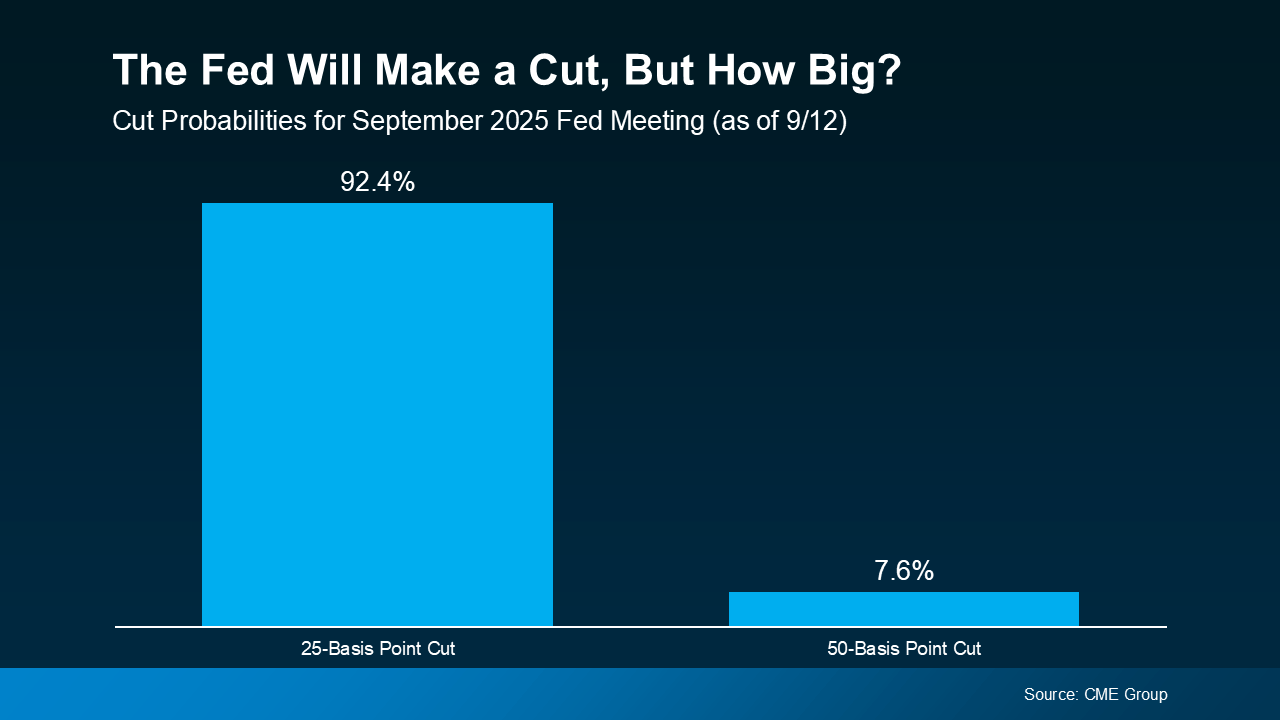
According to the CME FedWatch Tool, markets are already betting on it. There’s virtually a 100% chance of a September cut. And based on what we know now, there’s about a 92% chance it’ll be a small cut (25 basis points) and an 8% chance it will be a bigger cut (50 basis points):

a graph of a graph of a companySo, what exactly is the Federal Funds Rate? It’s the short-term interest rate banks charge each other. It impacts borrowing costs across the economy, but it’s not the same thing as mortgage rates. Still, the Fed’s actions can shape the direction mortgage rates take next.

Why Markets Already Saw This Cut Coming

Here’s the part that may surprise you. Mortgage rates tend to respond to what the financial markets think the Fed will do, before the Fed officially acts. Basically, when markets anticipate a Fed cut, that outlook gets priced into mortgage rates ahead of time.

That’s exactly what happened after weaker-than-expected jobs reports on August 1 and September 5. Each time, mortgage rates ticked down as financial markets grew more confident a cut was coming soon. And even though inflation rose slightly in the latest CPI report, the Fed is still expected to make a cut.

So, if the Fed goes with a 25-basis point cut, as expected, that’s likely already baked in to current mortgage rates, and we may not see a dramatic drop.

But if they go bigger and drop their Federal Funds Rate by 50 basis points instead, mortgage rates could come down more than they already have.

So, Where Do Mortgage Rates Go from Here?

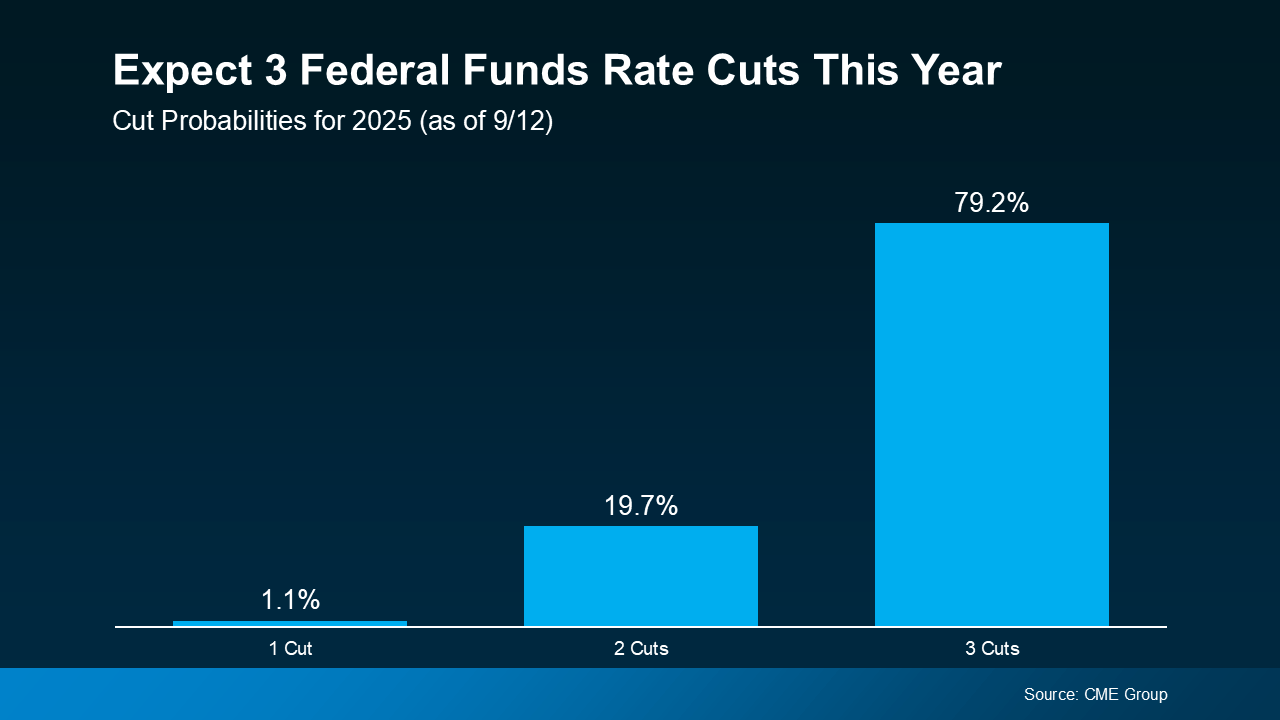
While the upcoming cut may not move the needle much, many experts expect the Fed could cut the Federal Funds Rate more than once before the end of the year. Of course, that’s if the economy continues to cool (see graph below):

a graph of cut cutsAs Sam Williamson, Senior Economist at First American, explains:

“For mortgage rates, investor confidence in a forthcoming rate-cutting cycle could help push borrowing costs lower in the back half of 2025, offering some relief to housing affordability and potentially helping to boost buyer demand and overall market activity.”

If multiple rate cuts happen, or even if markets just believe they will, mortgage rates could ease further in the months ahead. But here’s the catch – all of this depends on how the economy evolves. Surprise inflation data or unexpected shifts could quickly change the outlook.

Bottom Line

Mortgage rates likely won’t drop sharply overnight, and they won’t mirror the Fed’s moves one-for-one. But if the Fed begins a rate-cutting cycle, and markets continue to expect it, mortgage rates could trend lower later this year and into 2026.

If you’ve been waiting and watching the housing market, now’s the time to talk strategy. Even small changes in rates can make a meaningful difference in affordability, and understanding what’s ahead helps you make the best decision for your situation.

Posted in Helpful Tips
Aug. 19, 2025

Is It Better To Buy Now or Wait for Lower Mortgage Rates? Here’s the Tradeoff

Is It Better To Buy Now or Wait for Lower Mortgage Rates? Here’s the Tradeoff


Mortgage rates are still a hot topic – and for good reason. After the most recent jobs report came out weaker than expected, the bond market reacted almost instantly. And, as a result, in early August mortgage rates dropped to their lowest point so far this year (6.55%).

While that may not sound like a big deal, pretty much every buyer has been waiting for rates to fall. And even a seemingly small drop like this reignites the hope we’re finally going to see rates trending down. But what’s realistic to expect?

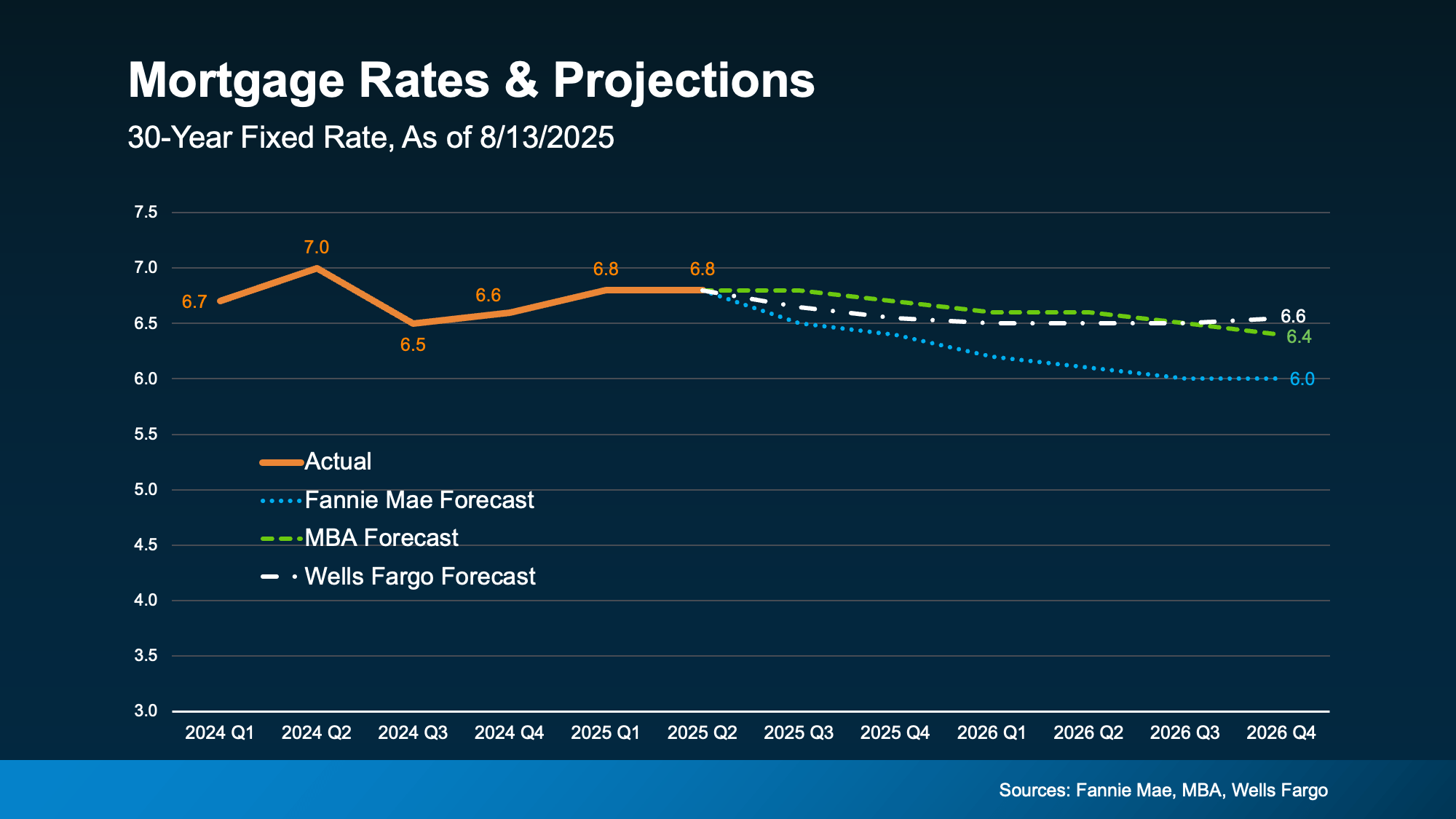
According to the latest forecasts, rates aren’t expected to fall dramatically anytime soon. Most experts project they’ll stay somewhere in the mid-to-low 6% range through 2026 (see graph below):

a graph with numbers and linesIn other words, no big changes are expected. But small shifts, like the one we just saw, are still likely. 

Each time there’s changing economic news, there’s a chance mortgage rates will react. And with so many reports coming out this week, we’ll get a better feeling of where the economy and inflation are headed – and how rates will respond.

What Rate Would Get Buyers Moving Again?

The magic number most buyers seem to be watching for is 6%. And it’s not just a psychological benchmark; it has real impact. A recent report from the National Association of Realtors (NAR) says if rates reach 6%:

  • 5.5 million more households could afford the median-priced home
  • And roughly 550,000 people would buy a home within 12 to 18 months

That’s a lot of pent-up demand just waiting for the green light. And if you look back at the graph above, you’ll see Fannie Mae thinks we’ll hit that threshold next year. That raises an important question: Does it really make sense to wait for lower rates?

Because here’s the tradeoff. If you’re waiting for 6%, you need to realize a lot of other people are too. And when rates do continue to inch down and more buyers jump into the market all at once, you could face more competition, fewer choices, and higher home prices. NAR explains it like this:

"Home buyers wishing for lower mortgage interest rates may eventually get their wish, but for now, they’ll have to decide whether it’s better to wait or jump into the market."

Consider the unique window that exists right now:

  • Inventory is up = more choices
  • Price growth has slowed down = more realistic pricing
  • You may have more room to negotiate = you could get a better deal

These are all opportunities that will go away if rates fall and demand surges. That’s why NAR says:

"Buyers who are holding out for lower mortgage rates may be missing a key opening in the market."

Bottom Line

Rates aren't expected to hit 6% this year. But when they do, you’ll have to deal with more competition as other buyers jump back in. If you want less pressure and more negotiating power, that opportunity is already here – and it might not last for long. It all depends on what happens in the economy next.

Let’s talk about what’s happening in our area and whether it makes sense to make your move now, before everyone else does.

Posted in Market Updates